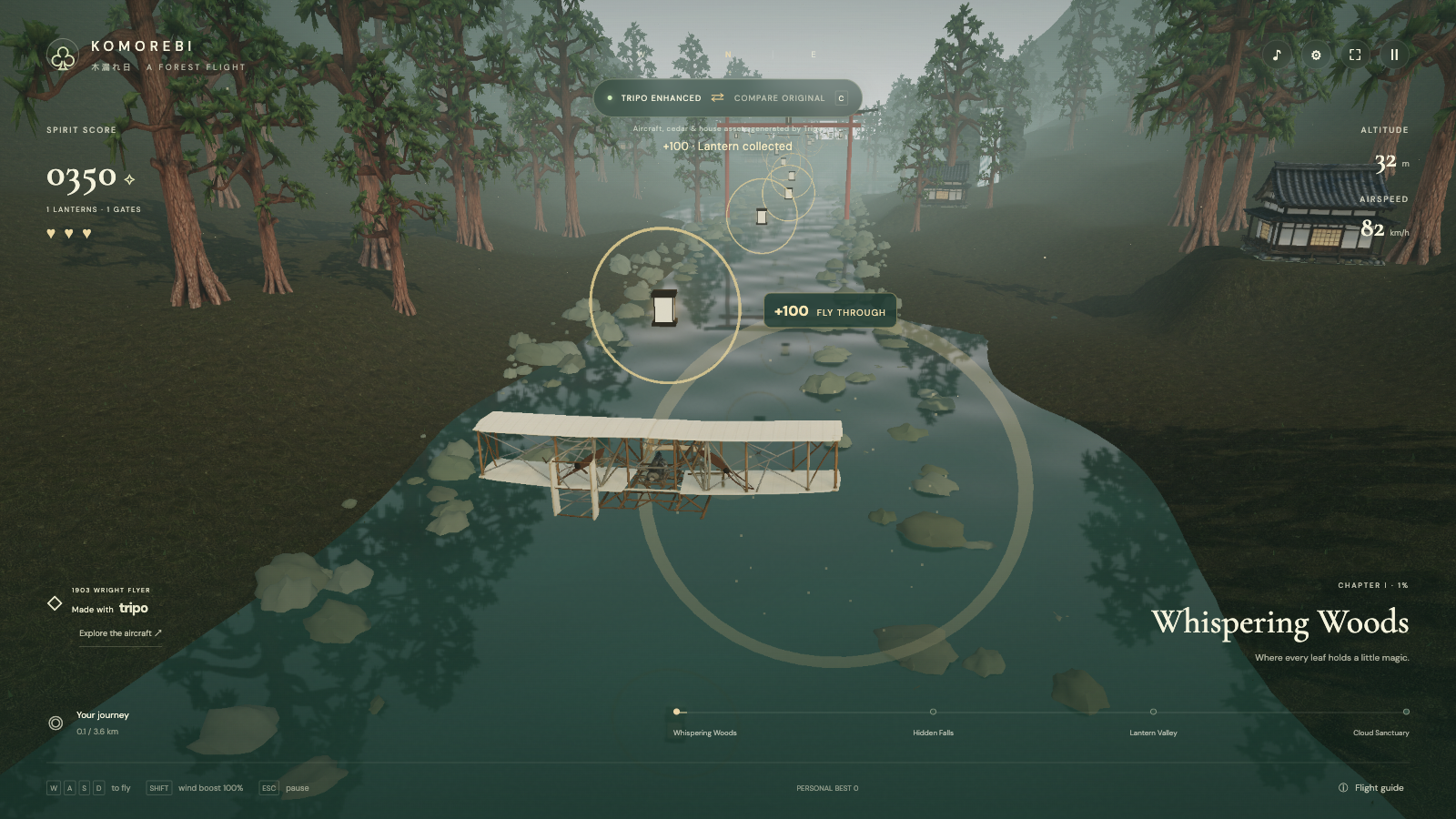
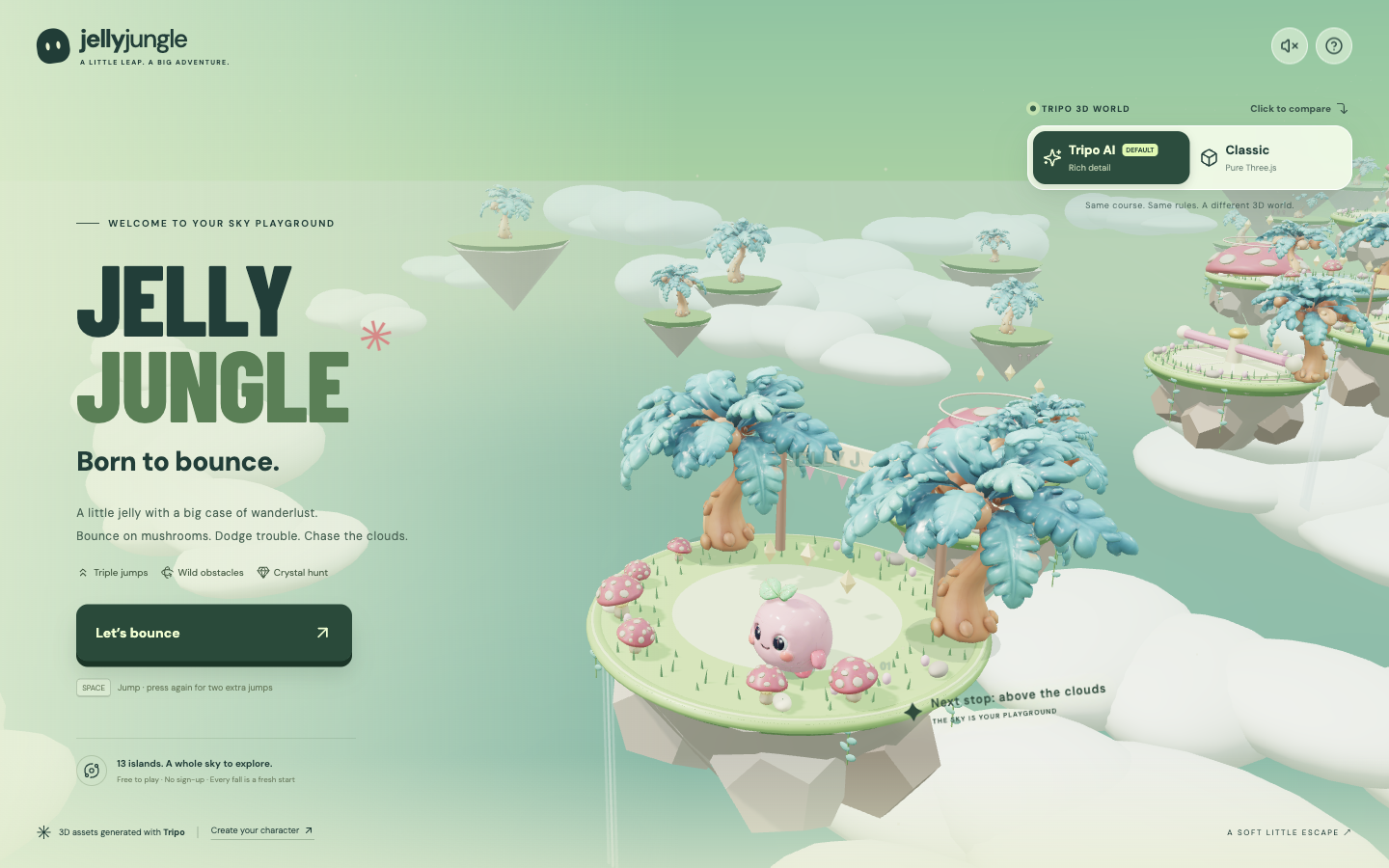
The author shares a self-contained prompt template for an 18-second Spotify-themed motion graphics film. The root post explicitly attributes the demonstrated motion-design workflow to Opus 5.5 and says the template can be used to recreate it.
Create a complete, polished Spotify-themed motion graphics video from the following brief. This prompt is self-contained: no reference video or supplied assets are required.
<deliverables> An 18-second MP4 at 1920×1080 and true 60 fps, with music and subtle sound effects Complete editable source Build, render, inspect, and refine the animation before delivering it Do not stop at a storyboard, still images, or an implementation plan </deliverables>
<art_direction>
A premium music-product film presented inside a large, nearly black rounded rectangular stage
The stage occupies roughly 80% of the canvas width and 75% of its height, centered horizontally and slightly below the vertical center
Outside the stage, use a soft atmospheric green background: luminous emerald near the upper-left corner, deeper forest green toward the sides, fading to near-black at the bottom
Inside the stage:
Near-black background
White primary typography
Muted gray secondary text
Spotify green # 1ED760 for emphasis and controls
One clean sans-serif font, such as Geist or Inter
Consistent icon strokes and restrained shadows
Keep compositions compact and centered, with substantial negative space
Text should feel like music-product advertising, not oversized presentation headings
Do not add an outer caption, creator watermark, decorative footer, or progress counter
</art_direction>
<artwork> Create original square album artwork for a fictional track called “Glass Tides” by “AURA”
The hero cover is an abstract macro image of flowing pearlescent liquid silk and molten glass
Use pastel lavender, powder cyan, blush pink, champagne gold, and subtle mint
Include broad three-dimensional folds, realistic reflective highlights, delicate striations, and a prominent sweeping S-shaped fold
Fill the square edge to edge
No text, logo, or border on this hero artwork
Use this same artwork consistently throughout the film
Create additional designed playlist sleeves:
“Late Nights” in mustard yellow
“Good Energy” in pink
“Deep Focus” in blue
“Daily Mix 1”, “Daily Mix 2”, and “Daily Mix 3” in complementary colors
These should look like finished graphic-design covers, with bold typography and simple geometric motifs
</artwork>
<timeline> 0.0–0.6 seconds: A green Spotify icon grows smoothly into the center of the dark stage Give it a confident arrival with minimal overshoot
0.6–1.5 seconds:
The icon transitions into a small Spotify identity above two centered lines:
“Discover”
“new music”
The first line is white; the second is green
Reveal them with short masked vertical movements
1.5–2.4 seconds:
A stylized Spotify desktop interface rises into view
Show a slim sidebar, “Made for you”, three album cards, and small supporting rows
Use a subtle perspective tilt during the entrance, settling toward a frontal view
2.4–3.2 seconds:
Move closer to the three featured covers
Show “New for you” above them
Keep the artwork crisp, with short album titles beneath
A narrow rounded player bar now anchors the bottom of the stage
3.2–4.0 seconds:
The featured cards withdraw into a compact “Fresh finds” list
Reveal four song rows with a slight stagger
Each row contains a thumbnail, short track title, artist, and a small menu icon
4.0–4.9 seconds:
Transition into a horizontal strip of colorful playlist covers
Heading: “Every mood”
Supporting line: “Find what moves you”
The strip slides smoothly sideways, with edge cards partially cropped by the stage
4.9–5.8 seconds:
A compact search field appears
Type “Glass Tides”
Reveal one selected result beneath it, with the iridescent artwork, “AURA”, and a green play icon
5.8–6.6 seconds:
The selected artwork expands into a large centered cover
Reveal “Glass Tides” underneath, followed by “AURA” in green
Keep the player bar visible
6.6–7.5 seconds:
The same cover slides left
Track information appears on the right:
“Glass Tides”
“AURA”
“A new frequency”
Add a rounded green Play button
Coordinate the cover movement and text reveals
7.5–8.3 seconds:
A brief brand-color transformation fills the inner stage with green
The artwork contracts into a smaller centered tile
Place a small dark Spotify identity underneath
The player briefly recedes
8.3–9.8 seconds:
Return to the dark stage
The same artwork expands dramatically toward the camera, becoming oversized and cropped by the rounded stage
Restore the player at the bottom
Use controlled motion blur during the fastest part of the zoom
9.8–11.2 seconds:
The artwork clears into a centered typographic statement:
“Find your”
“rhythm”
Use white for the first line and green for the second
The player remains visible and stable beneath it
11.2–12.5 seconds:
Show “Made for your every day”
Three playlist sleeves enter with gentle perspective and small opposing tilts
They spread into six smaller sleeves across the stage
Supporting line: “Your sound, always evolving”
12.5–14.0 seconds:
The playlist layout transitions into four floating album covers
Include the iridescent hero artwork
Use restrained rotation, perspective, depth ordering, and overlap
Keep their movement coordinated rather than randomly floating
14.0–15.2 seconds:
The covers converge toward the center and fold around a green Spotify icon
The artwork withdraws as the icon becomes the focal point
Fade the player away
The Spotify icon must emerge from the same central position as the converging covers
15.2–18.0 seconds:
The icon moves slightly left and settles beside a large white “Spotify” wordmark
Keep the icon and letters separated throughout the movement
Reveal:
“Discover new music”
“every day”
The first line is white; the second is green
Hold the finished composition cleanly through the end
</timeline>
<persistent_player>
For most of the middle sequence, keep one narrow rounded player bar near the bottom of the inner stage
Include:
Small hero-art thumbnail
“Glass Tides” and “AURA”
Play and skip controls
A thin progress track
A small volume icon
Subdued dark translucent styling with a fine border
This recurring player connects the changing shots
It must remain visually secondary to the artwork
</persistent_player>
<motion_quality>
Match the energy of a tightly edited premium product film
Most visual ideas last approximately one second, but transitions remain smooth
Use continuous acceleration and deceleration
Favor critically damped springs or carefully tuned smooth easing
No repeated bouncing or large elastic overshoots
Preserve the hero artwork’s identity and position relationships through search, album detail, brand tile, and zoom
Use match-position transitions, coordinated scaling, masked reveals, and perspective
Outgoing titles must disappear before incoming titles occupy the same space
Avoid overlapping text, sudden camera resets, long blank intervals, and arbitrary full-frame crossfades
Clip every oversized cover and camera move cleanly to the rounded stage
No particles, shockwave rings, lens flares, camera shake, or unrelated stock footage
</motion_quality>
<audio> Create or select commercially usable electronic music around 120 BPM Use a clean pulse, warm bass, restrained melodic elements, and subtle transition accents Align important entrances, selections, zooms, and the logo reveal with musical events Keep effects quieter than the music No voiceover Do not use copyrighted commercial tracks without permission </audio>
<implementation_and_validation>
Build a deterministic animation driven by absolute time through an async window. seek(t) function
Every transform, opacity, mask, and UI state must be reproducible when seeking frames in any order
Do not depend on live timers, accumulated physics, or CSS transition state during export
Render true 60 fps with spatial antialiasing
Use 3–5 temporal subframe samples per output frame for restrained motion blur
Keep stationary text and artwork sharp
Inspect contact sheets and moving playback
Check the fast heading changes, artwork handoffs, zoom, cover convergence, and final wordmark spacing
Verify evenly spaced frame timestamps and the full 18-second duration
Fix visual defects before delivering the final MP4 and editable source
</implementation_and_validation>
How to use this prompt
01
Start with the right workspace
Open your preferred coding assistant or 3D tool. Use the model shown on the example as a starting point, and check any linked project for setup instructions.
02
Choose one thing to change
Swap the subject, art style or setting. Keep the camera and interaction clear. Build a small version first, then refine one detail at a time.
03
Give the scene its own assets
For a custom character or prop, create a 3D model from a short object description or reference image, then bring it into your project.
Previews belong to their respective creators. Check the original source and project license before reusing code or assets.