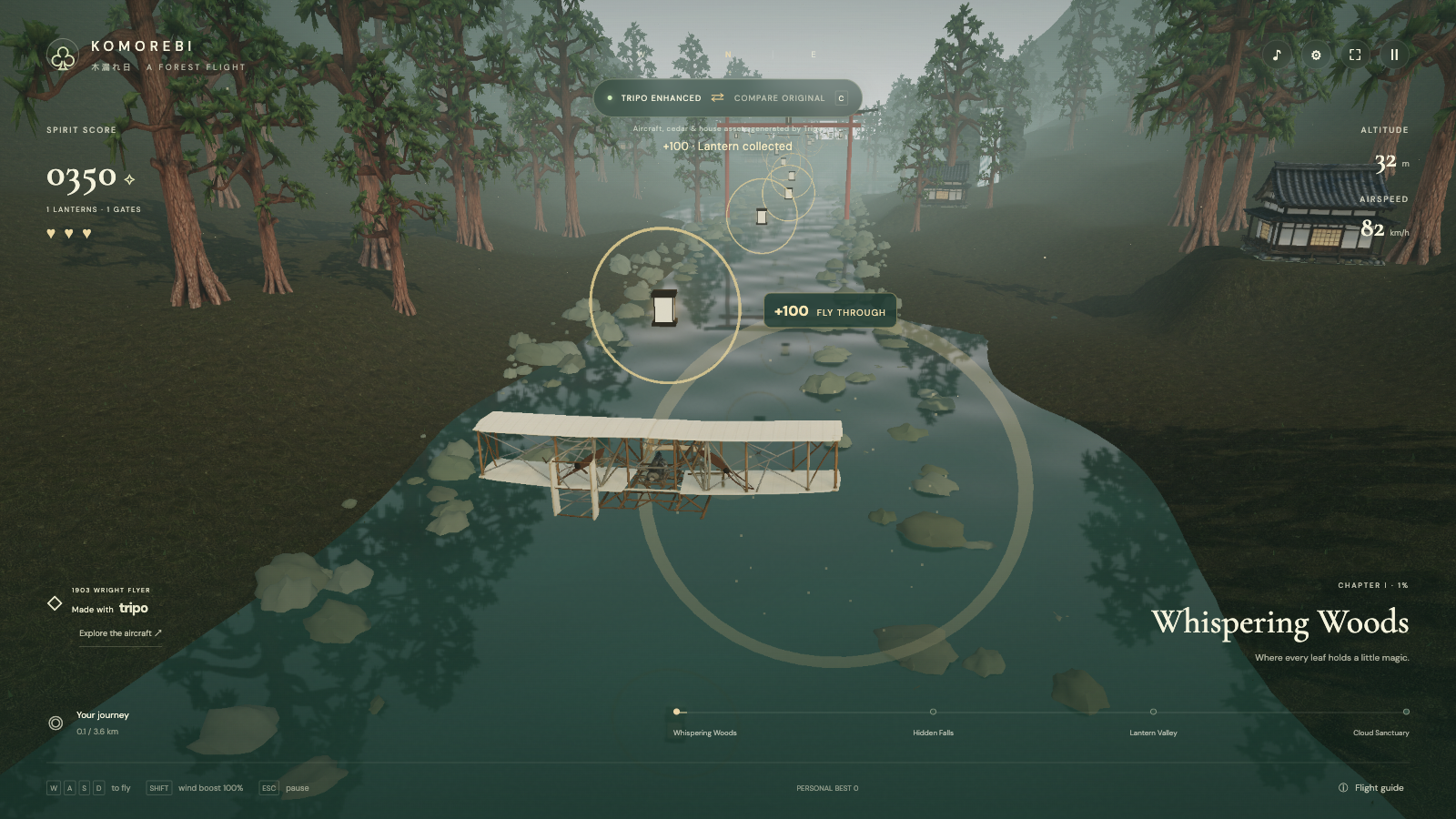
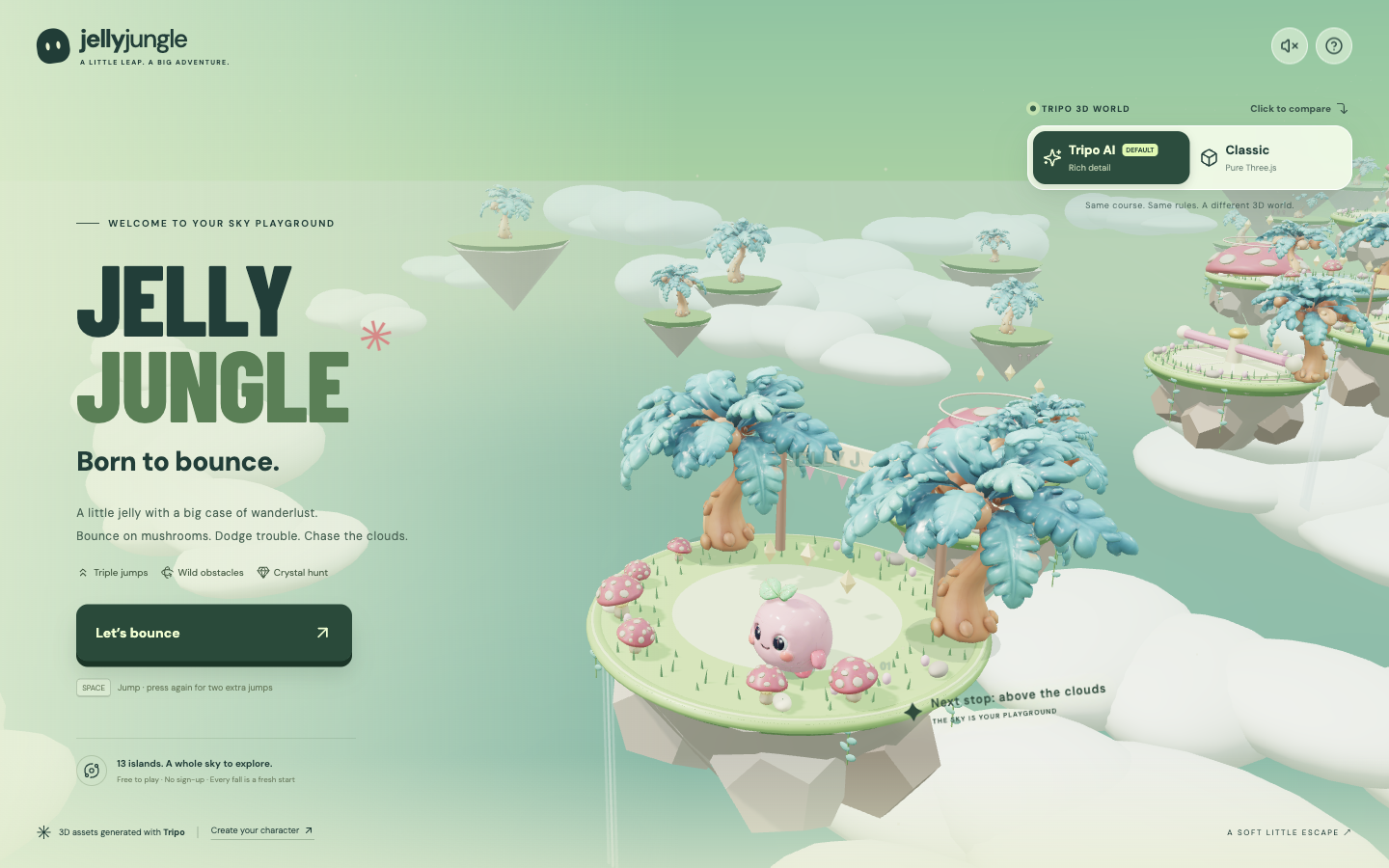
Creates a 12-second Blender white-model action animation of a swordsman destroying a monumental gate, then transforms it into a painterly fantasy-film sequence with a mountain fortress, collapsing structures, aerial camera reveal, music, and synchronized sound.
A starting brief based on the creator's public project, not a verbatim original prompt. Your result will vary.
Creator notes
Create a Blender white-model animation featuring an articulated swordsman, sword, scabbard, elevated stone platform, and monumental gate. Animate a fast sword slash, crescent energy wave, gate collapse, recovery, and a continuously rising aerial camera. Export the animation, then render it as a painterly fantasy-film sequence with a wine-red-coated swordsman, mountain fortress, destruction effects, cinematic lighting, music, and sound.
Create a 12-second white-model action animation in Blender, then use @PixVerse to transform the exported animation into a spectacular mature animated fantasy film sequence.
In Blender, build a simple articulated swordsman, a sword and scabbard, a vast elevated stone platform, and one enormous gate with surrounding pillars. Use clean white or light-gray geometry and basic lighting. Prioritize readable action, convincing proportions, and a strong contrast between the small character and monumental architecture. Represent the sword-energy wave with a simple animated curved shape, and divide the gate into pieces that can visibly separate and fall.
Start the camera close to the swordsman as he draws his weapon and briefly gathers force. Around the second second, animate one extremely fast, decisive slash driven by the feet, hips, torso, and arms. Release a visible crescent-shaped sword-energy wave that travels across the space and strikes the gate. Let the upper gate section slide along the cut, lose support, and collapse with clear acceleration and ground contact. After the strike, have the swordsman recover naturally, sheath the sword, straighten up, and relax his arms.
As the attack unfolds, pull the camera backward and upward in a continuous, smooth movement. Keep ascending dramatically until the ending becomes an extremely high, nearly vertical aerial view of the entire platform and surrounding terrain. The character may become too small to distinguish. Maintain fast action and a powerful sense of expanding scale rather than lingering on the attack pose. Check body motion, weapon continuity, the energy wave’s travel, gate collapse, and camera movement at normal playback.
Export the clean 12-second white-model MP4. Then use @PixVerse to generate a 12-second AI-rendered video, using the Blender animation as a loose reference for composition, action progression, and the rising camera. Preserve the essential sequence of preparation, slash, traveling energy wave, gate destruction, sheathing, and extreme aerial reveal, while allowing substantial cinematic expansion.
Create a mature painterly animated-film aesthetic, combining expressive shapes, hand-painted surfaces, convincing three-dimensional volume, and soft cinematic lighting. Give the adult swordsman a distinctive silhouette, a wine-red coat, restrained armor, and composed determination. Expand the setting into an immense mountain fortress with layered walls, towers, bridges, deep ravines, and a sprawling city beyond.
Make the crescent-shaped sword-energy wave a major visual event. It should cut through the gate and continue into distant fortifications, producing a readable chain of collapsing structures, sweeping dust, sparks, fire, and pressure waves. As the camera reaches extreme altitude, reveal the full path of the attack across the battlefield, with the swordsman standing quietly at its origin. Use cool atmospheric shadows contrasted with warm amber energy and scattered firelight. Include original cinematic music and synchronized sword, impact, collapse, wind, and distant city sounds.
Deliver the white-model MP4, the PixVerse AI-rendered MP4, and the editable Blender project.
How to use this prompt
01
Start with the right workspace
Open your preferred coding assistant or 3D tool. Use the model shown on the example as a starting point, and check any linked project for setup instructions.
02
Choose one thing to change
Swap the subject, art style or setting. Keep the camera and interaction clear. Build a small version first, then refine one detail at a time.
03
Give the scene its own assets
For a custom character or prop, create a 3D model from a short object description or reference image, then bring it into your project.
Previews belong to their respective creators. Check the original source and project license before reusing code or assets.